
Bob here for a thrilling winter escapade in the lively St. Boniface, Winnipeg’s hidden gem!
Did you know that long before Winnipeg became the winter playground we cherish today, Indigenous peoples lived on this land along the beautiful Red River?
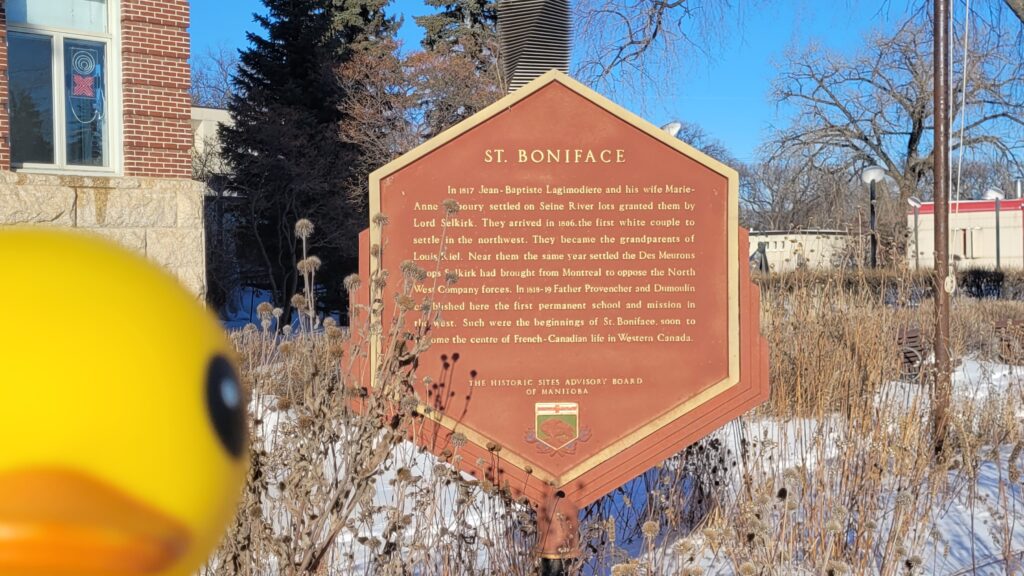
Fast-forward to the early 1800s. At that time, French settlers arrived, seeking adventure and delicious pastries!
The first settlement here in 1818 was like a delightful surprise snowflake, paving the way for the vibrant community of St. Boniface.
Waddling through the frosty streets, I could feel the excitement of those early pioneers bustling around!
Just picture it – houses, farms, and trading posts springing up. These features created a lively hub of French culture filled with colourful festivals, delightful music, and oh-so-scrumptious feasts!
I can almost taste the mouthwatering tourtière and fresh baguettes wafting through the crisp winter air!
In 1901, St. Boniface celebrated its official city status, ready to welcome everyone with open flippers!
The arrival of the railway added an extra zing, connecting locals to a world of adventure.
As I waddled through, I spotted charming historical buildings and lively streets.
Each of these held whispers of days gone by.
But wait – every good story has a twist!
As Winnipeg grew in the mid-20th century, St. Boniface embraced change and was officially incorporated into the City of Winnipeg in 1972.
Yet fear not! This neighbourhood’s spirit is as strong as a duck on a mission!
St. Boniface continues to charm visitors with its distinct culture. It is the largest Francophone community in Western Canada.
Upon entering St. Boniface, my little rubber heart danced joyfully!
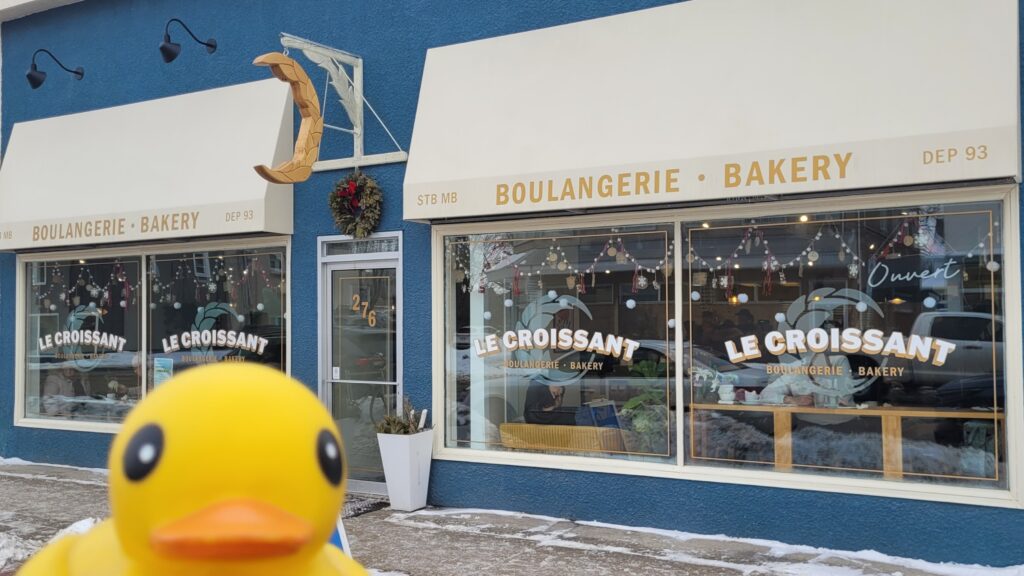
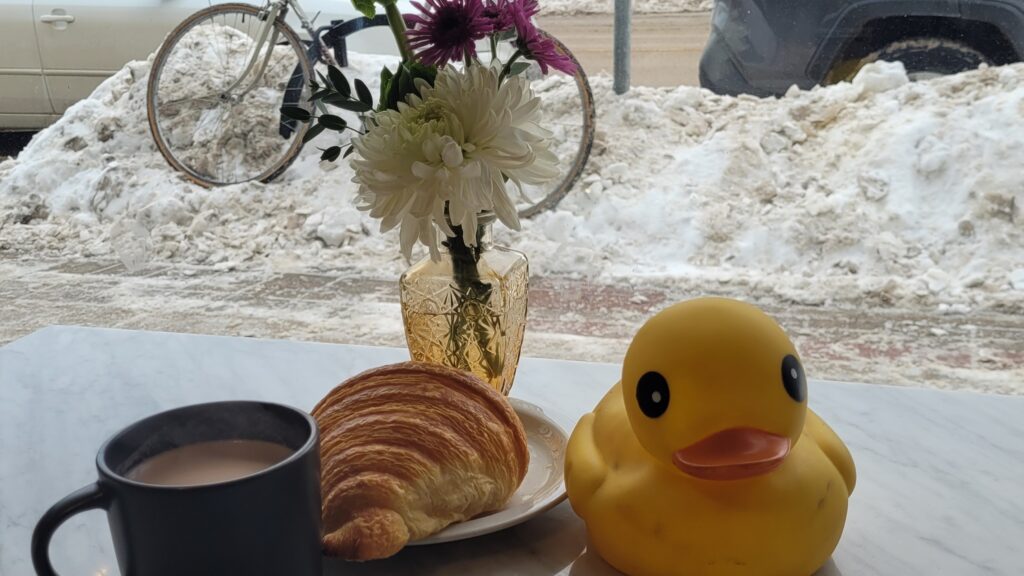
The crisp air was filled with the delightful aroma of baked goods from local bakeries, luring me like a shiny object.
I couldn’t resist stopping at Le Croissant, where I enjoyed a steaming cup of hot chocolate and a delightfully flaky croissant – heavenly!
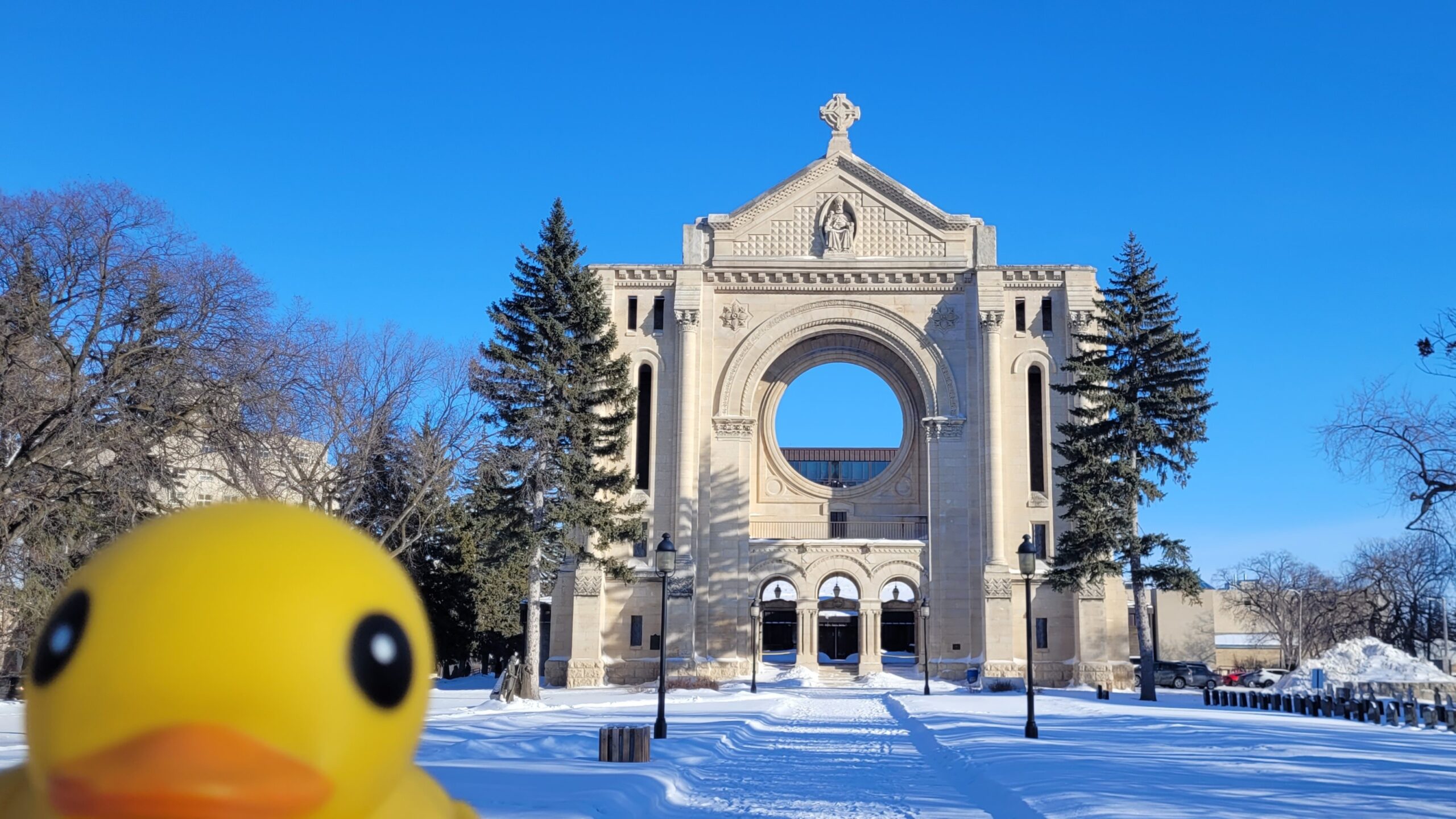
A must-visit in the area is the stunning St. Boniface Cathedral.
Although the site has been home to missions for over 200 years, the iconic structure was built in 1908.
The magnificent façade still stands despite a catastrophic fire in 1968.
It is a symbol of the St. Boniface community’s resilience.
Meanwhile, a new cathedral has been erected immediately behind
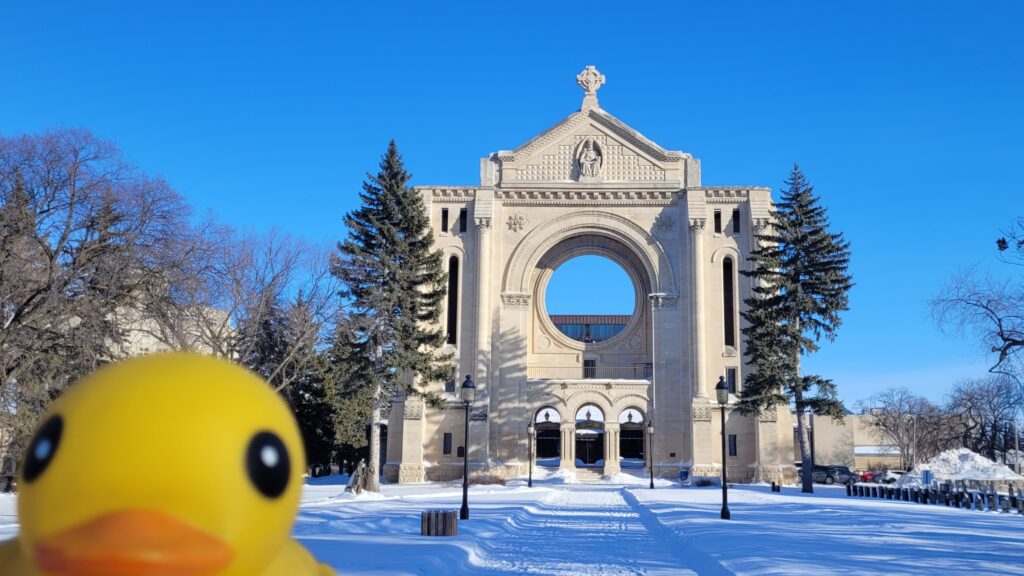
This architectural wonder sparkled against the snowy backdrop even in the winter chill, inviting awe and admiration!
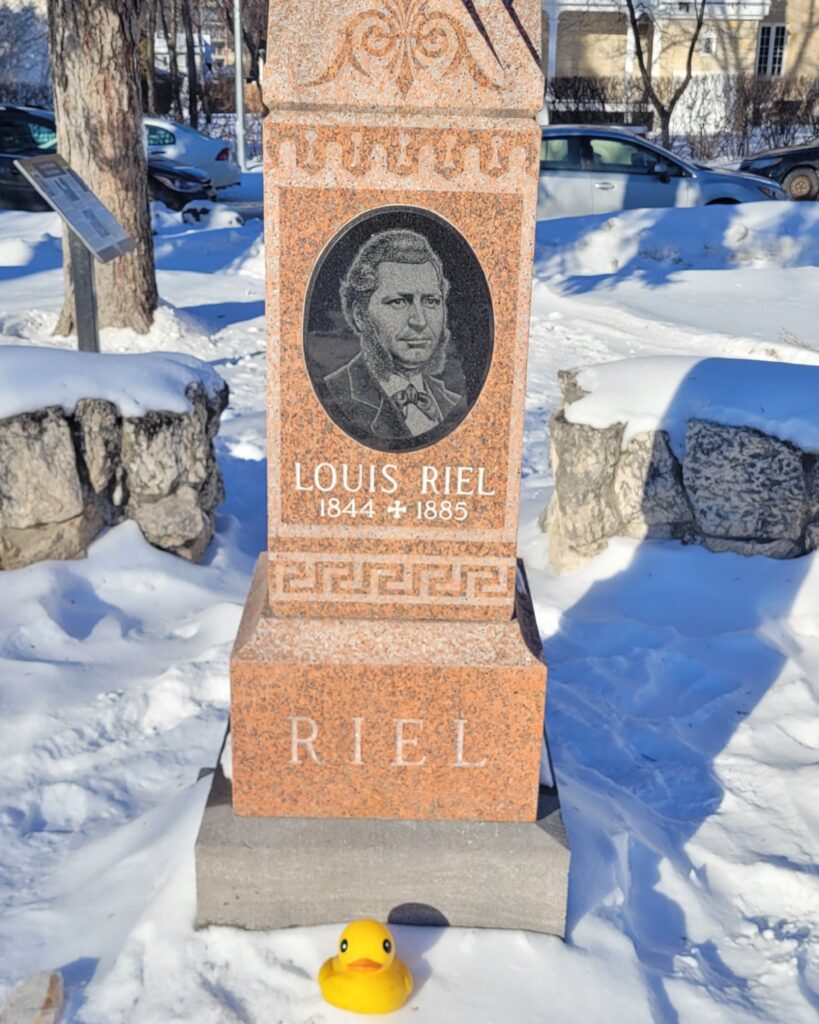
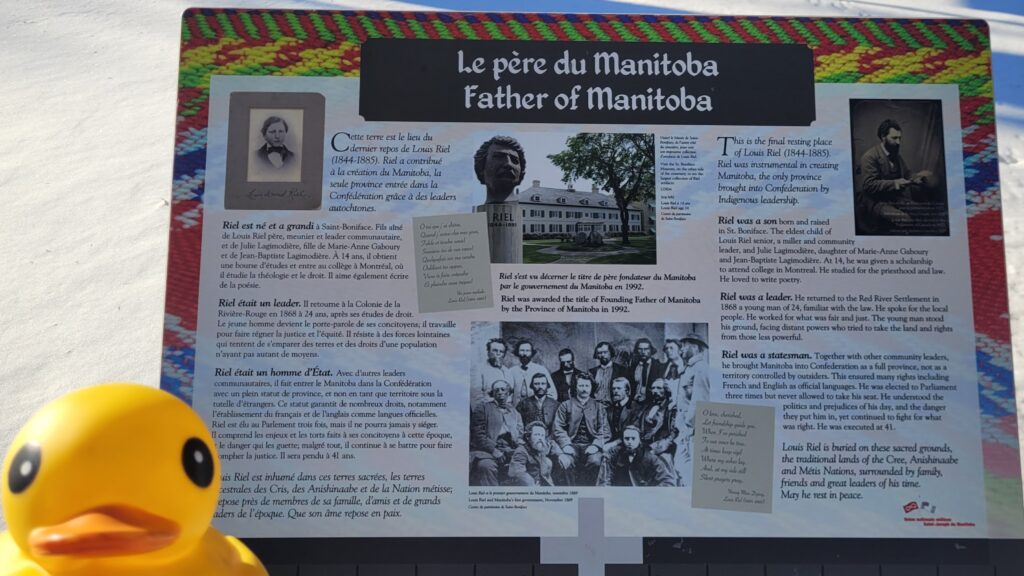
Just outside the cathedral lies the burial site of Louis Riel, a key figure in Manitoba’s history. Once viewed as controversial, he is now celebrated for his contributions, remembered every year during a provincial holiday. His legacy is a testament to Manitoba’s rich and complex history.
As I ventured further into St Boniface, I discovered another architectural treasure: the Precious Blood Roman Catholic Church.
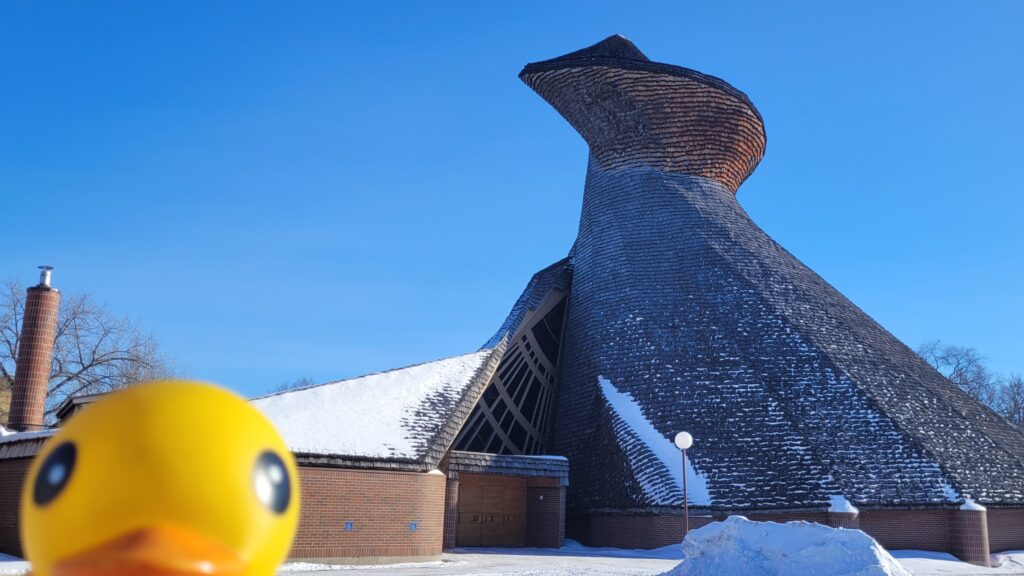
A postmodern marvel designed by Étienne Gaboury in 1968. Its unique shape, resembling a tipi, is a striking and fabulous addition to the St. Boniface skyline!
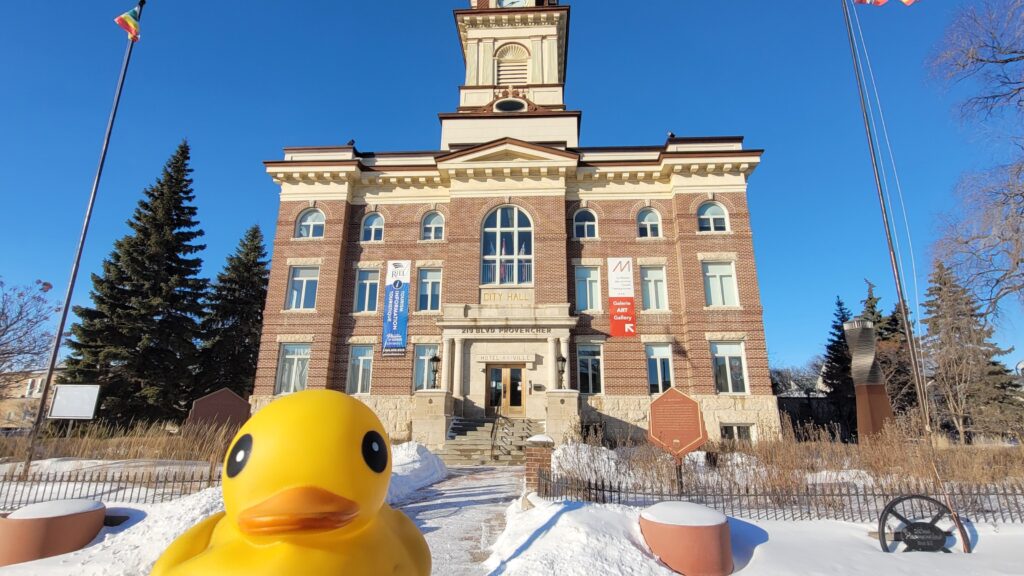
Waddling on, I ventured down Boulevard Provencher, which led me to the river.
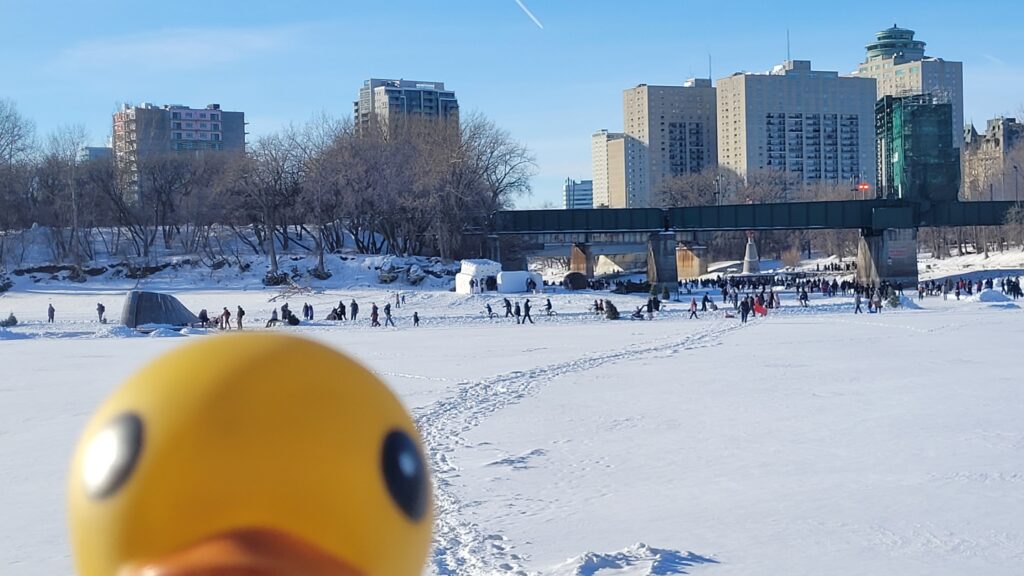
There, a beautiful trail stretches across from the Historic Forks.
During winter, the river transforms into a robust playground, allowing families to skate and stroll along the scenic path.
My rubber heart swelled with joy seeing the community embrace the winter magic of St. Boniface!
To all you winter wanderers out there, check out the enchanting St. Boniface!
With its rich history and vibrant culture, this charming neighbourhood is a wonderland waiting to be explored!
NEVER MISS A